
How Glendora Residents Are Found
A useful Glendora residents directory search separates ownership, occupancy, registration, and history. An assessor parcel can show a Glendora situs address, AIN, physical traits, and roll values, but a parcel record is not proof that a Glendora person sleeps there. A deed names parties to a recorded interest, while a city directory names a listed household for a particular year. A voter-status result is an authenticated check for the person who is signing in, not a public browse of a Glendora street. These limits make the order of the search matter.
Begin with the strongest Glendora clue and preserve the exact spelling that the custodian uses. An address points to the Los Angeles County Assessor Portal. An older Glendora household points to the free Glendora Community Archive. A court matter belongs in the Los Angeles Superior Court case search. When a Glendora record is not online, the California Public Records Act route goes to the agency that actually holds it.
- Record the Glendora name, address, alternate spellings, and the reason for the search.
- Use the Glendora assessor address or AIN search to identify the parcel and its situs facts.
- Check California My Voter Status only for an authorized personal confirmation, never as a Glendora street browser.
- Move from a lawful Glendora owner name and recording year to the RR/CC deed index in Norwalk.
- For earlier Glendora households, search the archive OCR, then inspect the page image and compare dates.
That sequence keeps a current Glendora parcel clue separate from a historical resident clue. It also leaves a clear handoff when a Glendora office, archive, or court clerk must answer the next question.
Where Glendora Keeps Resident Records
Glendora sits inside Los Angeles County, so Glendora resident research crosses three levels. The City Clerk handles municipal documents and starts a CPRA request. The county assessor and Registrar-Recorder/County Clerk keep Glendora parcel and recorded-instrument systems. California maintains statewide voter, vital, corporate, license, prison, and privacy services. Knowing the keeper prevents a dead-end search at the wrong counter.
Glendora City Clerk
116 E. Foothill Blvd.
Glendora, CA 91741
(626) 914-8210
Mon-Fri, 8-5
Los Angeles County Assessor
Glendora parcel and map search
Glendora AIN or situs address
Current roll snapshot
Assessor Portal
LA County RR/CC
Glendora real estate records
1851 to present
Norwalk name/year index
RR/CC real estate records
For Glendora state-held records, vital-records, archival, licensing, and corporate services each answer a different question. No single office replaces the others.
Current Glendora Resident Directory Sources
These Glendora sources can place a person, parcel, or listed household in context, but their fields do not mean the same thing. The table is a practical map of what each custodian actually exposes. A source that names a Glendora owner is not a resident roster, and a personal voter result is not permission to copy a block.
| Source | What It Lists | Keeper | Access |
|---|---|---|---|
| Glendora assessor parcel roll | AIN, situs, traits, values | LA County Assessor | Free AIN/address portal |
| Glendora voter status | One person's registration status | California and LA County elections | Authenticated personal lookup |
| Glendora recorded instruments | Deed parties, liens, legal descriptions | LA County RR/CC | Office index and copy request |
| Glendora permits and planning | Address projects and applications | City of Glendora | Civic Access portal |
| Glendora historical directories | Listed names and addresses by year | Glendora Community Archive | Free OCR and page scans |
For one Glendora person, a Glendora resident lookup can combine these sources without treating any one row as proof of present occupancy. For an entire Glendora street, start with the address path in the By Street section, then separate owner, occupant, and historical listing columns.
- Roll
- An official list or assessment record maintained for a defined purpose, such as parcels or registrations.
- Index
- A finding aid that points to a record; it is not always the record image itself.
- Glendora criss-cross directory
- A reverse directory arranged by address so a place can lead to a listed name.
- Glendora parcel
- A county-mapped unit of land identified by an AIN and physical boundaries.
Why Glendora Resident Deeds Are Not Online
Los Angeles County recorded instruments reach back to 1851, yet the RR/CC does not provide a public Internet deed index for Glendora and does not index deeds by street address or AIN. The search key is a person or entity name paired with a recording year. That Glendora quirk changes the first step: the parcel system supplies a lawful ownership clue and legal description, then the recorder index confirms the document trail at the county facility.
Glendora records from 1851 through 1957 are reviewed on the lower level in Norwalk. Records from 1958 forward are upstairs. A copy request generally needs indexed names, year, title, or document information. A published schedule inspected during research listed a name/year search charge and page-copy charges, but the RR/CC posted a fee notice on April 28, 2026. Confirm the current amount on the county recorded-document request page before sending payment.
A Glendora deed proves a recorded property interest. It does not prove that the grantee occupied the home. Pair the title trail with a city directory, census entry, permit chronology, or other independent record before describing a past household.
Note: A Glendora legal description can survive a street-name change, while an old street address may not lead to the same parcel.
The RR/CC recorder services page points to the Glendora office-only index rule before the image is read.
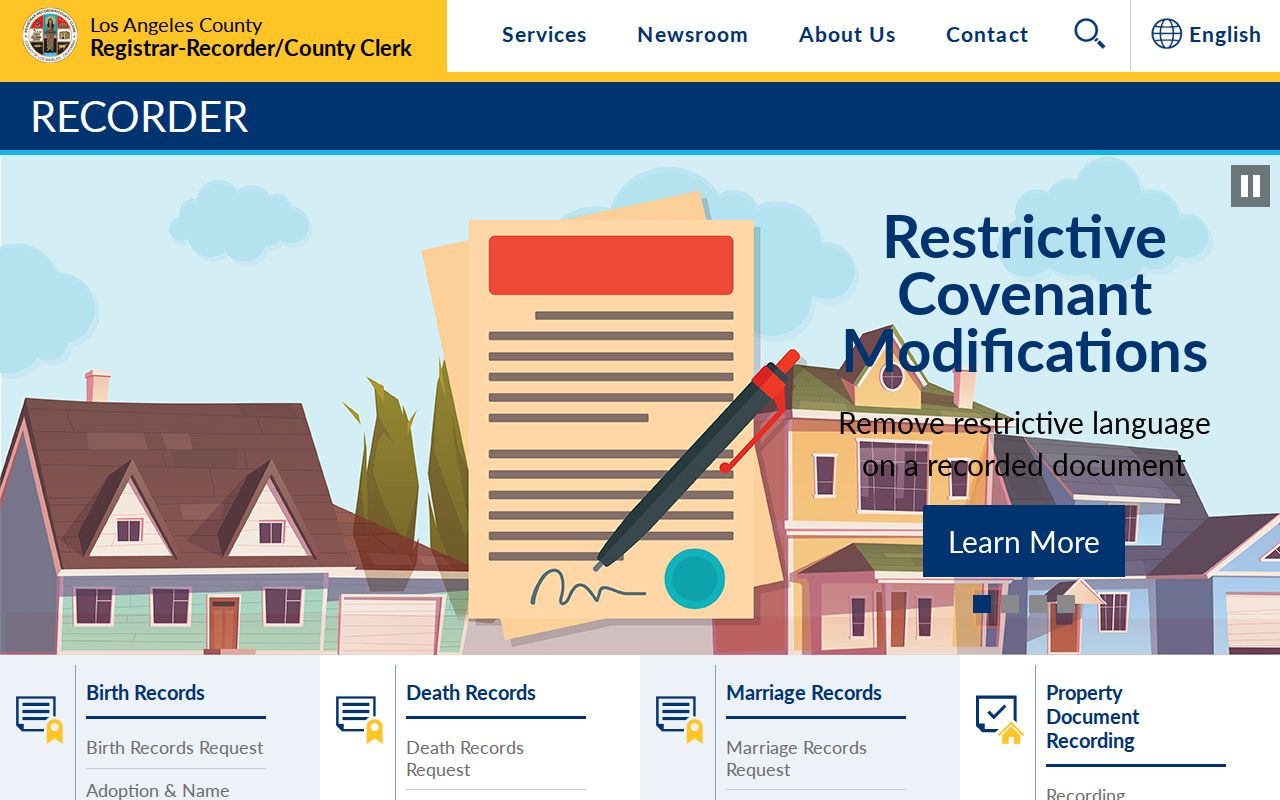
The notice image makes the Glendora boundary plain: an online property search is not the same tool as the county's name-and-year deed index.
Glendora Resident AIN and Address Search
The Los Angeles County Assessor Portal is the cleanest starting point when the clue is a Glendora address. Search by a ten-digit AIN or a Glendora situs address, then use the map view to confirm the parcel shape. The public sample exposes parcel identity, use type, parcel type, tax-rate area, status, create and delete dates, exemptions, use and design details, units, beds, baths, square footage, year built, land area, map links, and roll values. The inspected sample did not expose a Glendora owner name or mailing address on the public card.
| Search by AIN or Address | Autocomplete or text; required; ten-digit AIN or situs address |
|---|---|
| Basic Search | Optional tab for the general parcel route |
| Legal Search | Optional tab for legal-description research |
| Map Search | Optional tab for mapped parcel discovery |
Keep three Glendora labels in separate columns: situs means the physical parcel location, mailing means where correspondence is sent, and legal description means the title boundary. An AIN joins the assessor parcel to a map and gives the recorder search a better starting clue. The local mapping hub adds the Glendora map layer, but the public research did not verify a wildcard street browse or a current owner-name search.
Glendora Resident Voter Status Is Personal
California My Voter Status and the LA County voter-status tool are useful only for an authorized Glendora personal confirmation. The captured fields are last name, birthdate, house number, and ZIP Code. The result can confirm a person's own registration status, but it cannot browse all registered voters on a Glendora street. A separate voter-file request may contain name, date of birth, registration date, residential and mailing address, precinct, party preference, optional participation history, and districts, subject to a contract, lawful purpose, and fee.
California Elections Code section 2194 excludes driver-license or identification numbers, Social Security digits, unique identifiers, and signatures. Ballot choices never appear. The state schedule cited in research lists countywide files at $146, precinct, district, or city files at $54, and an added file at $39; verify those amounts before relying on them. A Glendora street index has different rules for candidates, committees, and public political-purpose requests.
Use the California My Voter Status route for your own Glendora check, or the LA County status tool when that is the relevant custodian. A voter row is residency evidence at a point in time, not a public Glendora residents directory.
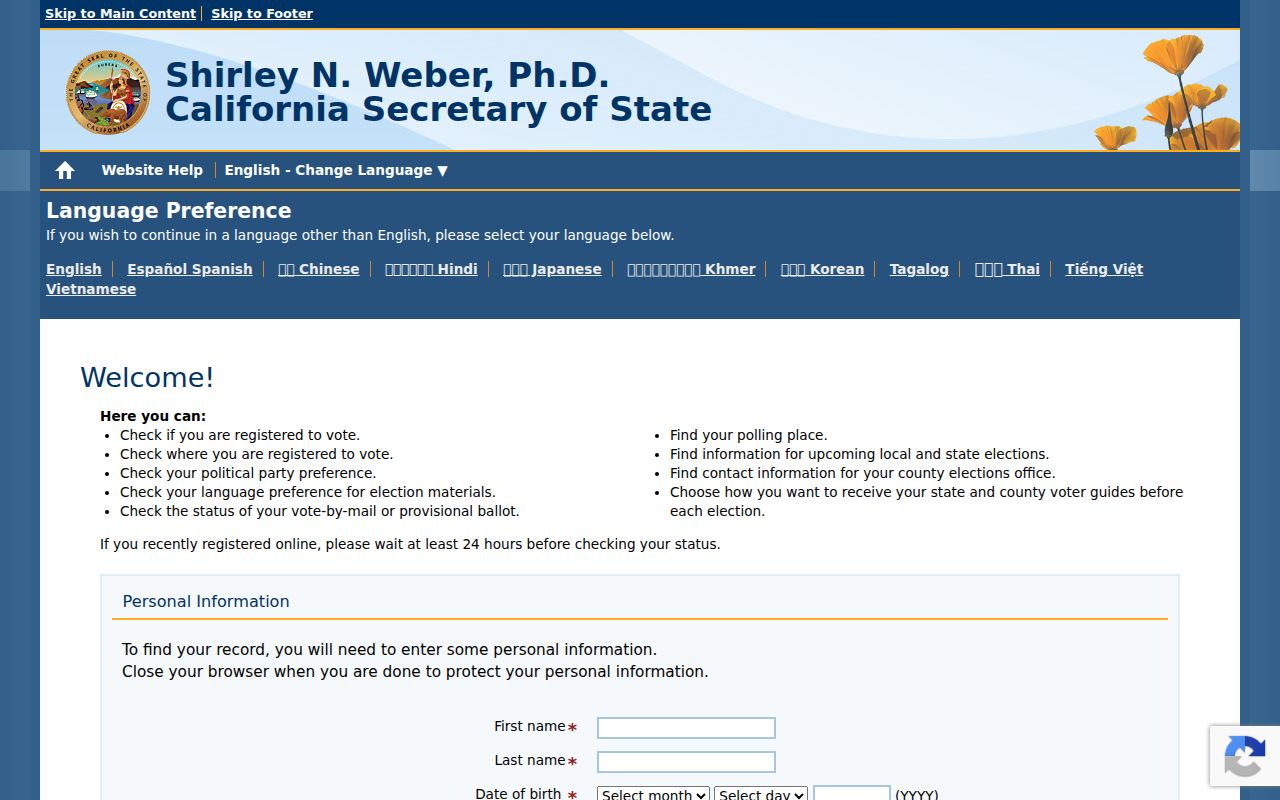
The state lookup image shows why the four matching fields are a Glendora personal verification step rather than an open name list.
Glendora Resident Court Name Search Routes
Glendora matters route to the Superior Court of California, County of Los Angeles. The Glendora court page offers an “Enter case number” path, an “Access Case” action, and an “Access Calendar” path for future hearings. Civil, family, probate, and some small-claims name searches use a paid party-search route. Criminal matters have a defendant-name route. Selected civil and small-claims document images may be available through an account or guest access, while criminal and family images are not generally online through the same channel.
Glendora results may show the case number, parties, case type, filing or register of actions, and hearing calendar. Name and document searches incur public-access fees under California Rule of Court 2.506 and Government Code section 68150(l). Courthouse terminals and the Glendora clerk remain the fallback when the online route does not answer the question. Juvenile, adoption, mental-health, sealed, and other protected files remain restricted.
Federal matters for Glendora use the Central District of California, Western Division, through a federal docket account. Party and case searches normally cost $0.10 per page, a document is normally capped at $3, and quarterly fees of $30 or less are waived. The LA Court Find a Case page is the local starting point.
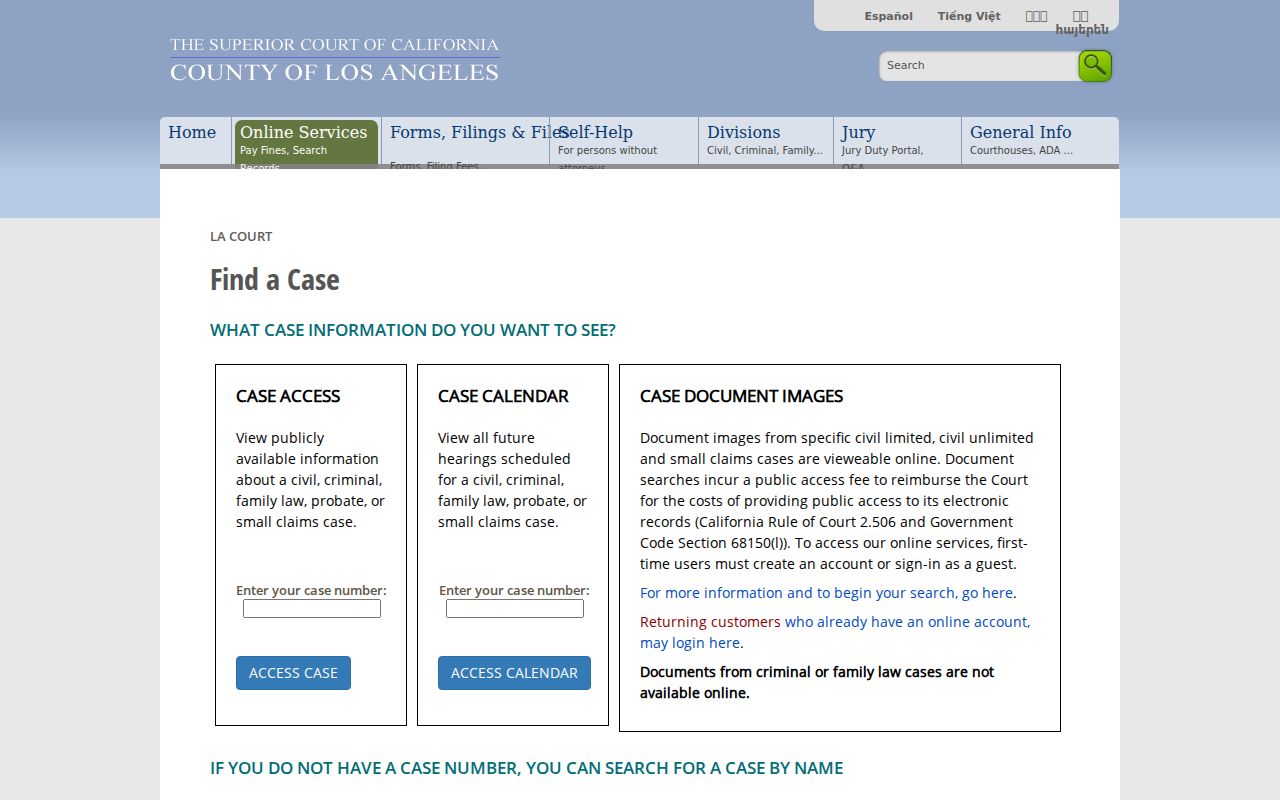
Reading the Glendora court result as a case chronology, rather than as a resident roster, keeps parties, hearings, and protected files in their proper context.
Glendora Resident Vital Copy Choices
Glendora birth records in Los Angeles County begin in 1866, but California vital records do not follow a simple “open after a set number of years” rule. An informational copy can document an event without proving identity. An authorized copy requires the status set by law and a sworn identity statement, notarized for mail or online requests. The county uses VitalChek for online orders, while the county office and state vital-records office provide the forms and custody information.
When inspected, the Glendora county birth fee was $34. Birth records from 1962 forward, except 1972 through 1977, could be supplied at appointment; older ranges, the exception years, and informational copies were mailed within 20 working days. CDPH fees listed for 2026 were $31 for birth, $26 for death, $19 for marriage, and $18 for a dissolution certificate. A failed search retains its fee and produces a no-public-record certificate.
Public marriage and confidential marriage are different. Family Code section 511 limits a confidential marriage certificate to spouses or a court order. Adoption files are confidential. A divorce judgment comes from the Superior Court, while CDPH supplies a certificate of record. Those distinctions matter when a Glendora resident lookup needs a Glendora life-event clue instead of a present address.
Note: Choose Glendora informational or authorized copies based on the question, because the two products carry different identity and eligibility effects.
Glendora Resident History on the Shelf
The historical Glendora residents directory shelf is unusually useful because the Community Archive provides free OCR scans. The run contains 20,524 pages of Glendora City Directories from 1957 through 1994, plus a December 1946 telephone directory. Nearby Glendora newspaper and magazine runs add context: Glendora Gleaner, 1901-1932; Press and Gleaner, 1932-1948; Glendora Press, 1926-1962; Community News, 1994-2018; and Glendoran Magazine, 1983-2022.
Search the Glendora archive for a surname and address, then open the page image. OCR can miss narrow columns, initials, compound Spanish surnames, diacritics, and abbreviations. A city directory can show a listed name, address, spouse in parentheses, occupation, and an owner or non-owner mark when the volume uses one. It is a time-specific listing, not proof that every Glendora household member lived there.
The Glendora city directories page handles the collection-reading method in depth. The Glendora local-history service also explains the archive, while the Historical Society adds photographs, yearbooks, maps, citrus and water ledgers, and named family material.
Glendora Resident Business and License Cross-Checks
A Glendora business or professional record can corroborate a name without proving a home address. Glendora requires a city business license and routes the search to HdL at the city business-license portal. The portal covers licensed-business search, applications, renewal, payment, and closure. The Business Support Center number is (626) 376-4678, and the research lists Glendora@hdlgov.com.
For a Glendora company, California Secretary of State bizfile shows entity status, dates, addresses, agent information, and filings. LA County RR/CC handles fictitious business names. Professional credentials require the relevant board, such as DCA, CSLB, the Medical Board, RN Board, State Bar, DRE, teacher credential, ABC, or LA County health inspection lookup.
A city license answers a Glendora tax or operating-registration question. A professional license answers a credential question. An agent address answers a filing question. Treat each as an affiliation clue and verify the underlying record with its custodian.
Glendora Resident CPRA Requests
The Glendora California Public Records Act is Government Code section 7920.000 and following. A request goes to the agency that keeps the responsive record. Glendora City Clerk Kathleen Sessman is the local records officer, and the City Clerk page is the starting point for Glendora municipal legislation, permits, licenses, police records, agreements, campaign filings, minutes, ordinances, resolutions, older packets, and the Municipal Code.
A Glendora agency ordinarily determines within ten calendar days whether it holds responsive disclosable records. Unusual circumstances can add up to fourteen days. Inspection is generally free, while copy charges are usually direct duplication cost unless another law controls. Defined electronic extraction or programming can carry a charge. Ask for a specific record type, date span, department, address, or file number rather than requesting “everyone in Glendora.”
The Glendora documents hub may already contain an agreement, agenda packet, ordinance, or resolution. Use a CPRA request for an identifiable Glendora item that is not posted. The county and state offices have their own request channels for deeds, vital records, court files, voter data, and licenses.
Protected Glendora Resident Addresses
Some people will not appear in an ordinary Glendora residents directory trail because California gives protected groups a substitute-address route. Safe at Home supplies qualifying Glendora participants with a substitute address and mail forwarding. Government Code section 6208.1 protects a participant's address and phone after a demand. Recorder redaction rules under Government Code sections 27300 through 27307 address Social Security information in recorded documents.
California privacy rights include access, deletion, correction, opt-out of sale or sharing, limits on sensitive information, and nondiscrimination. Global Privacy Control is recognized. In 2026, California DROP opened a free request that can reach more than 500 registered data brokers, with broker processing beginning August 1, 2026. Removing a broker copy does not erase the Glendora government source. The official California deletion platform is the proper starting point.
The California Safe at Home program is the state source for qualifying Glendora substitute-address protection.
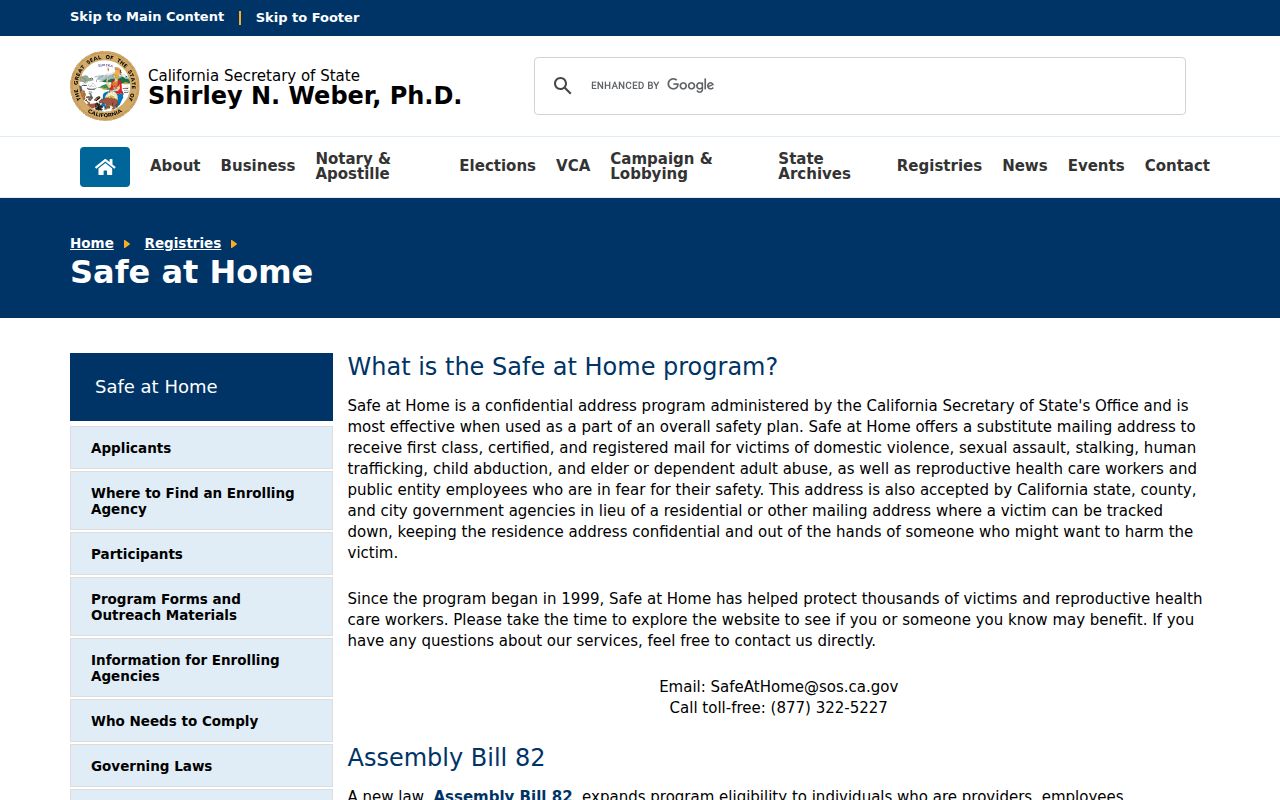
The Safe at Home image underscores why a missing Glendora address is not evidence that a person has no record or no connection to Glendora.
The California DROP platform provides the separate data-broker deletion route.
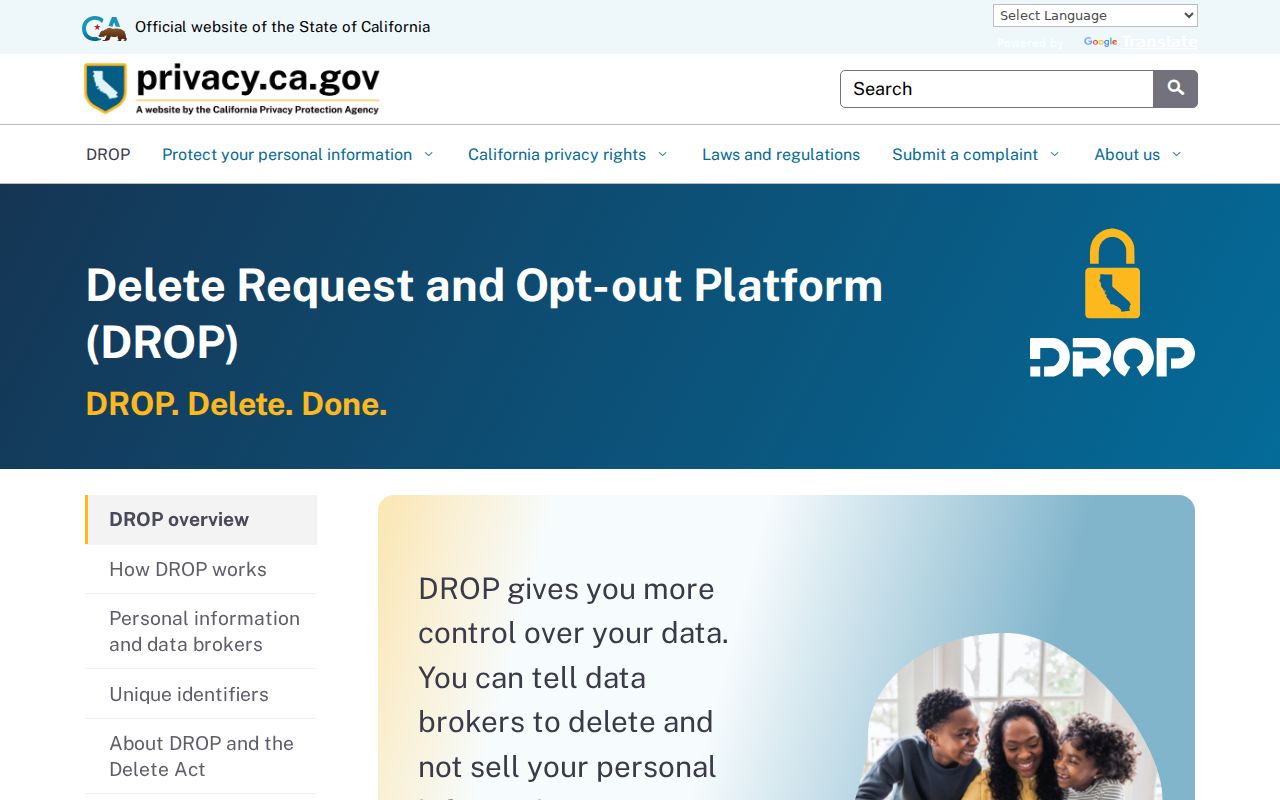
Glendora data-broker deletion can reduce copied information, while the original county, city, or state custodian remains the place to ask for correction.
What Glendora Resident Records Cannot Prove
Official Glendora records are strong when their field matches the question and weak when it does not. A parcel record can locate land. A deed can show a recorded interest. A permit can date a project. A directory can show a listed household. A voter-status tool can authenticate one person's own registration. None of those facts alone proves who is present today.
| Source | Useful role | Boundary |
|---|---|---|
| Glendora assessor AIN and situs | Find a parcel and physical facts | Current occupant |
| Glendora recorded deed | Follow a named property interest | Continuous residence |
| Glendora city permit | Date work at an address | Applicant lived there |
| Directory or census | Place a listed household in time | Complete household membership |
| Voter status | Confirm your own registration | Public street browsing |
| Commercial compilation | Possible lead across sources | No custodian or guaranteed correction route |
Lawful use. Glendora records support personal, lawful Glendora research and civic understanding. Do not use a name or address to stalk, harass, intimidate, or harm anyone.
Commercial compilers may repackage Glendora official sources, charge for access, and lag behind the custodian. They are not authoritative. When a record is wrong, stale, or incomplete, contact the office that created or holds it and ask about its correction process.
Glendora Resident Records Through Time
Glendora was founded in 1887 and incorporated in 1911. Los Angeles County began in 1850, and its deed series starts in 1851. Local Glendora record history then moves through a reading room opened in 1904, city library support in 1912, a present library opened in 1972, and a computerized catalog replacing cards in 1989.
One small story explains why the Glendora local library matters to a search. During the 1918 influenza epidemic, books returned from infected homes were sealed for a year. Today, digitized agendas, Civic Access, and the Community Archive make many records easier to reach, but they do not turn every historic name into a searchable public list. The best Glendora residents directory work still joins a modern parcel clue to a dated directory, a court result, a deed, or an archive page.
For a Glendora street, use By Street. For a former Glendora household, use Past Residents. Each trail works because the record type, time period, and access rule stay visible.