
Glendora Directory Collections on the Shelf
The strongest Glendora directory run is held in the free Community Archive, where OCR and page images make a large local shelf usable from home. For a Glendora search, the collection also preserves newspapers and magazines that can explain a move, business, school connection, or neighborhood reference. Exact publishers and some year-by-year gaps require inspection of the title and sample pages, so the years below are Glendora coverage statements rather than a claim about a publisher name.
| Collection | Years | Where Held | Access |
|---|---|---|---|
| Glendora City Directories | 1957-1994 | Glendora Community Archive | Free OCR and scans |
| Glendora Telephone Directory | December 1946 | Community Archive | Digital collection |
| Glendora Gleaner | 1901-1932 | Community Archive | OCR scans |
| Press and Gleaner | 1932-1948 | Community Archive | OCR scans |
| Glendora Press | 1926-1962 | Community Archive | OCR scans |
| Community News | 1994-2018 | Community Archive | OCR scans |
| Glendoran Magazine | 1983-2022 | Community Archive | OCR scans |
The Glendora Community Archive is the first stop for the digitized run. The library eLibrary can add subscription databases, and the Glendora local-history service can point a researcher toward material that is not in the OCR shelf.
20,524 Glendora Directory Pages
The Glendora directory portion of the archive contains 20,524 pages from 1957 through 1994. That number matters because a Glendora search is not limited to a few highlight volumes. It can follow a surname across many years, compare an address before and after a move, and show when a name disappears from the local listing. The page count also explains why a single OCR hit should be treated as a lead rather than as the whole record.
Glendora's archive has unusual depth for a local search. The 1946 telephone directory reaches earlier than the city-directory run, while newspapers and magazines fill the years between or around directory volumes. A Glendora surname can appear in a business notice, club item, school reference, obituary, or local event even when the directory entry is hard to read.
Note: A large Glendora page count improves the odds of finding a name, but it does not guarantee a complete run or a legible scan for every year.
Search Glendora Directory OCR
Use the Glendora archive's advanced search fields to begin with full text for people, places, and events. Boolean term rows, Country, State, City, Title, and From and To date triples help narrow a noisy surname. Search a last name with a Glendora address fragment, then try a first initial, a street fragment, and a second date range. The archive's OCR is fast, but it is not the final reading.
Open the Glendora page image for every promising result. Narrow columns, broken type, initials, punctuation, and abbreviations can produce a false negative or a wrong name. A Spanish compound surname may be split. A hyphen may vanish. A street number can be read as a date. The scan supplies the visual check that the Glendora OCR text cannot.
The archive advanced-search route is available at Glendora advanced search. For a printed Glendora volume that is not indexed, the library's Community Archive and local-history staff remain the fallback. The directory search therefore has both a digital channel and a human shelf channel.
How to Read a Glendora Directory Entry
A Glendora directory entry is compact. It can give a surname, given name or initial, spouse in parentheses, occupation, address, and sometimes a widow, owner, or non-owner mark. Those symbols vary by Glendora volume and must be read with the volume's abbreviation key. An entry is a dated listing. It does not establish every person in the household, a current address, or a continuous residence.
| Name | Surname, given name or initial, with a spouse sometimes in parentheses |
|---|---|
| Occupation | The line of work or role printed by the directory |
| Address | House number and street, with local abbreviations |
| Household mark | Owner, non-owner, widow, or other symbol when used in that volume |
| Abbreviation key | The volume's explanation of short forms and symbols |
- Glendora criss-cross directory
- A reverse section arranged by street address, used to work from a place toward a listed name.
- Glendora householder index
- An alphabetical name section that points to the household listing or address.
- Abbreviation key
- The legend that explains short forms, marks, and symbols used across the volume.
Glendora Directory's 1946 Phone Book Bridge
The December 1946 Glendora telephone directory is a useful bridge between the older newspaper shelf and the later city-directory run. It can supply a name and telephone listing for a year before the 1957 directory series begins. Search the name, copy the exact spelling and address, then test the same person in later Glendora volumes. A phone listing is voluntary and incomplete, so it should be paired with a deed, census, obituary, or archive story.
Street-order or criss-cross pages are especially helpful when the known clue is a Glendora address. If the telephone book and a later volume use different street formats, compare the parcel map and legal description before assuming a move. A listing that vanishes can reflect a move, death, an unlisted number, or a change in the printed Glendora coverage.
The Glendora library local-history page describes the archive service. The page also places the Glendora library in its longer chronology, from a reading room in 1904 to city support in 1912, the present library in 1972, and a computerized catalog in 1989.
Tracing Family Through Glendora Directories
Glendora directory research works best as a year-to-year comparison. Start with a known name and address, then follow the listing in both directions. Note every change in spelling, spouse, street, and household mark. When a person disappears, search newspapers, obituaries, probate material, and the 1950 census before deciding what happened. The goal is a documented Glendora sequence, not a guess based on one matching name.
- Find the first reliable name or address hit and save the scan citation.
- Search nearby directory years and record each address, spouse, initial, and symbol.
- Flip to the criss-cross pages to test the address from the street side.
- Pair the directory span with the 1950 census and recorded deeds.
- Use newspapers, obituaries, probate, or the Historical Society to close a gap.
The Glendora By Street page handles modern parcel and deed work. The Glendora collection itself supplies the historical household layer, including people who may not be named in the title chain.
Glendora Directory Help at Library
The Glendora Public Library is more than a link to a scan. Its Community Archive connects directories to newspapers, magazines, local-history help, and the context needed to read a short listing. The Glendora library address is 140 S. Glendora Ave. and its research phone is (626) 852-4891. Those details make the physical Glendora help channel visible when OCR is poor or a needed item has not been digitized.
Glendora library chronology also explains why the local shelf spans many record forms. Glendora's reading room opened in 1904, the city assumed support in 1912, the present library opened in 1972, and cards gave way to a computerized catalog in 1989. Modern search tools are helpful, but the historical collection still rewards looking at the page, its neighboring entries, and its legend.
| 1904 | Glendora reading room opens |
|---|---|
| 1912 | City assumes library support |
| 1946 | December telephone directory in the archive |
| 1957-1994 | Glendora City Directory page run in the Community Archive |
| 1972 | Present library opens |
| 1989 | Computerized catalog replaces cards |
Use the official Glendora Community Archive and History page for the local service route and the eLibrary page for other digital resources.
Glendora Directory Historical Society Files
The Glendora Historical Society and Museum add records that a local directory cannot. Holdings include family photographs and documents, school materials and yearbooks, business and organization records, water and citrus ledgers, phone directories, maps, and magazines. The official holdings list names Whitcomb, Shorey, Bender, Cullen, Engelhardt, Kamphefner, De Shields, Casey, Finkbiner, Odell, LaFetra, Preston, West, and Wright family material.
Those Glendora collections can connect a directory listing to a school, business, organization, water company, or family file. They are especially useful when a surname is common or a street address changed. The museum building itself first served as city hall, jail, firehouse, and American Legion Post 153 before museum use, a detail that gives Glendora local context without turning a directory hit into a biography.
The Glendora Historical Society is the source for the museum and holdings route.
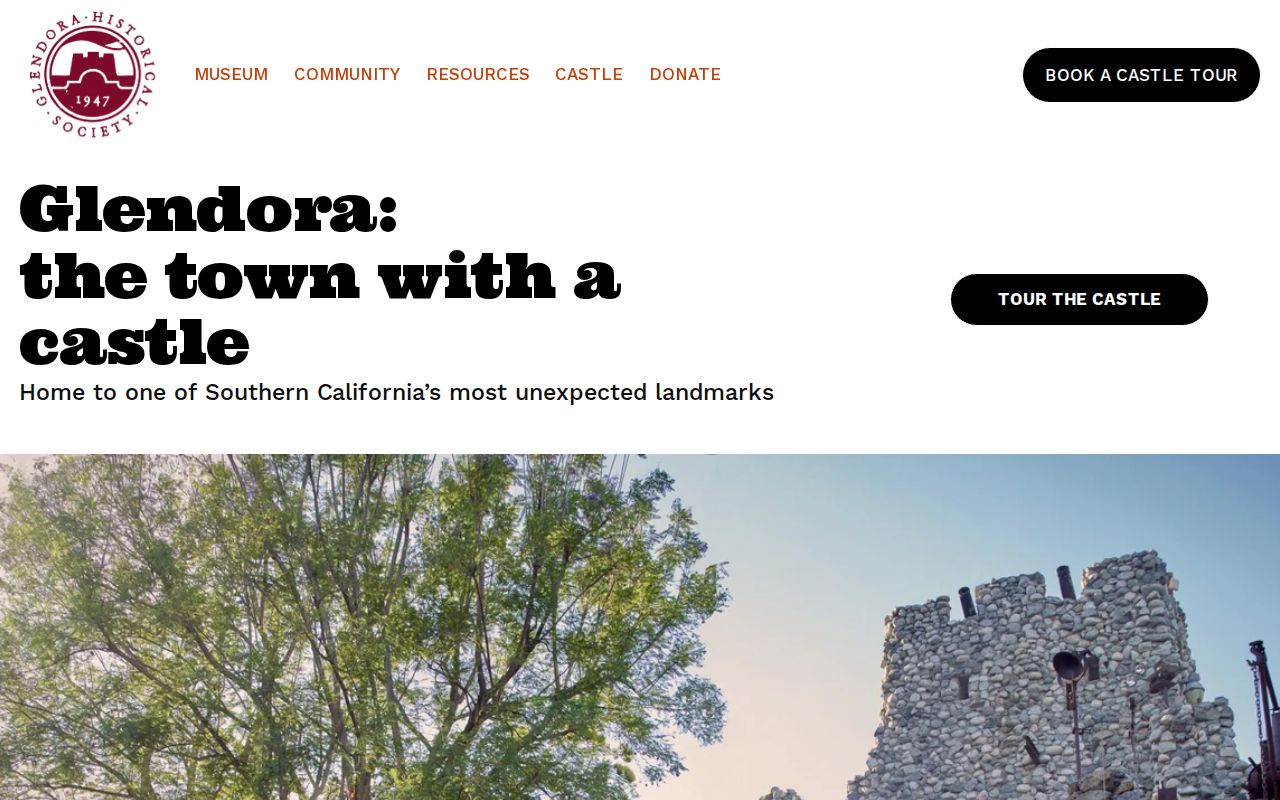
The Glendora Historical Society image shows the companion shelf that can make a short directory entry meaningful without overstating what the printed line proves.
Glendora Directory's 1918 Library Story
During the 1918 influenza epidemic, books returned from infected homes were sealed for a year. That small Glendora detail belongs in a records search because it illustrates how physical custody and public access have always shaped the Glendora directory shelf. A volume may exist, but a reader may still need the library, an archive scan, or a page image to interpret it.
Today, the Glendora Community Archive, city documents, and digital catalog give a faster route than a card catalog or closed shelf. They do not make every historic resident searchable. The 1918 story is a useful caution: access conditions are part of the Glendora record history, not a footnote to it.
Pair Glendora Directories With Census
The 1950 census is the latest census released under the 72-year rule, and the 1960 release is expected in 2032. Pair the census with the Glendora directory years instead of treating either as a complete household roll. The census supplies an enumerated household at one moment. A directory supplies a listed name and address across a different set of years. Deeds add recorded property interests, while obituaries and probate can explain an ending.
For a Glendora family-history question, write the source and date beside every fact. “Listed at an address” is different from “owned the parcel.” “Enumerated in a household” is different from “appears in a phone book.” A careful Glendora directory search keeps those phrases distinct and leaves room for a missing year or an unlisted person.
When the historical trail needs a current Glendora parcel anchor, move to the Los Angeles County Assessor Portal and preserve the AIN before comparing the older address.