
Sources for Glendora Previous Residents
Glendora address history is strongest when the source and its time span are visible. The recorder reaches much farther back than the city directories, while the assessor is a current Glendora parcel snapshot. Directories and census schedules show listed or enumerated households. Permits date physical changes, and obituaries or probate can explain why a household trail ends. Sanborn coverage for Glendora was not verified, so it should not be promised as a source.
| Source | Years It Covers | Where Held | What It Shows |
|---|---|---|---|
| Glendora recorded instruments | 1851-present | LA County RR/CC | Owners, parties, legal descriptions |
| Glendora recorder lower-level indexes | 1851-1957 | Norwalk lower level | Earlier name and year search |
| Glendora recorder upper-floor indexes | 1958-present | Norwalk upper floor | Later name and year search |
| Glendora city directories | 1957-1994 | Glendora Community Archive | Listed names and addresses |
| Telephone directory | December 1946 | Community Archive | Listed phone names and addresses |
| Census | Public through 1950 | Federal census releases | Enumerated household at a date |
| Permits | Cutoff not verified | Glendora Civic Access | Address work chronology |
The Glendora sequence begins with a current parcel and ends with the oldest source that can still be tied to the same land. The State Archives can add state and genealogy holdings when the local shelf runs out of Glendora material.
Start With the Glendora AIN for Past Residents
Begin a Glendora previous-residents search at the Los Angeles County Assessor Portal. Search the current situs address or ten-digit AIN, save the parcel facts, and open the map to confirm the lot shape. AIN is the county parcel key. Situs is the physical location. Mailing address is correspondence geography. The legal description is the title boundary that can survive a Glendora street-name or number change.
The public assessor sample exposed use type, parcel type, tax-rate area, status, create and delete dates, exemptions, physical characteristics, map links, and roll values. It did not expose a Glendora owner name or mailing address on the public card. Follow the lawful county channel for an ownership clue, then use the person and year key that the recorder actually indexes.
The LA County Assessor Portal is therefore the Glendora parcel anchor, not a list of previous residents. For a modern chain, the Glendora By Street walkthrough handles the current address path.
Following Glendora Past Residents' Title History
Los Angeles County RR/CC has no public Internet deed index for Glendora and does not index recorded instruments by street address or AIN. Search keys are an indexed person or entity name and recording year. Records from 1851 through 1957 are reviewed on the lower level in Norwalk; 1958-present records are upstairs. A Glendora deed chain is therefore a name-and-year project built from the parcel clue.
- Capture the current Glendora AIN, situs, and legal description from the assessor route.
- Identify the current Glendora owner clue through the lawful county channel.
- Search that Glendora name as grantee, the party receiving the instrument, for the likely year.
- Copy the grantor, grantee, date, document number, title, and legal description.
- Search the seller as an earlier grantee and repeat until the chosen era is reached.
- Grantor
- The party conveying or giving the recorded interest.
- Grantee
- The party receiving the recorded interest.
- Chain of title
- A linked sequence of recorded interests for one parcel.
- Legal description
- The title language that identifies the land beyond a mailing address.
The RR/CC viewing page explains the Glendora office-only index. The copy request page supplies the document-order route. A cited schedule listed a $0.50 name/year search and page-copy charges, but an April 28, 2026 fee notice means current Glendora amounts must be confirmed.
Glendora Previous Residents' 1851 and 1958 Index Split
The Glendora lower-level and upper-floor split is more than a building detail. It tells a researcher where to continue when a name disappears at the edge of a volume or index range. Start in the 1851-1957 material for an older Glendora parcel history, then move upstairs for 1958-present. Preserve the exact name form and recording year as the search crosses that boundary.
The RR/CC has a local Internet gap, so a failed web search does not mean a Glendora deed is absent. The fallback chain is the Norwalk counter, the published viewing instructions, a records copy request, and then the local library or archive for the household layer. The county recorder remains the authority for the instrument itself.
Note: The county's oldest verified Glendora deed coverage begins in 1851, but the public Glendora index is accessed by name and year rather than address.
Preserve the Glendora Address for Past Residents
Glendora street names can be spelled in several ways, numbers can be renumbered, and a postal label can cross a city line. A legal description is less likely to drift with those changes. Copy it from the deed or recorder image, compare it with the parcel map, and keep it beside the AIN. When two address strings look similar, the legal description and parcel polygon are the safer Glendora test.
The Glendora research did not verify a Glendora street-renumbering year, official grid baseline, E911 assignment statement, or AIN digit interpretation. That is a useful boundary on the search. Do not invent a crosswalk for an old address. Ask the recorder, assessor, library, or city records custodian for the underlying map or index that can resolve it.
Past Glendora Residents: Directories and Census
Owners are only half of a Glendora previous-residents story. The Community Archive holds Glendora City Directories from 1957 through 1994 and a December 1946 telephone directory. The city directory entry may show a listed name, spouse, address, occupation, and a household symbol. The census shows an enumerated household for a specific date. These sources can reveal a Glendora household that never appears in the title chain.
Search OCR first, then inspect Glendora page scans for initials, narrow columns, and address-order sections. Pair directory years with the 1950 census, newspapers, obituaries, and deeds. The Glendora city directory collection page explains the shelf itself. The previous residents trail uses that shelf as one dated layer among several.
Glendora process: directory year and address → scan the listed name → compare the nearest census date → check deeds and obituaries for the change → record the source and uncertainty.
Glendora house-history use. A previous-residents search is suited to Glendora family history, estate work, and research into a place over time. A listed household is evidence for its year, not a claim about every person who ever lived there.
Glendora Past Residents Archive OCR and Phone Book
The digitized Glendora archive contains 20,524 directory pages from 1957-1994, plus newspapers and magazines that can explain a move or a family connection. The December 1946 telephone directory bridges the years before the city-directory run. Use full-text “Find people AND places AND events,” Boolean rows, title, city, and From and To dates. Then inspect the image, because OCR can split names, lose initials, or misread an address number.
A disappearing Glendora entry can mean a move, death, an unlisted number, a change in volume coverage, or a spelling shift. Check the next and prior years, then search the Glendora Gleaner, Glendora Press, Community News, Glendoran Magazine, and local obituary material. The archive is free online, while the library local-history service is the in-person fallback when an item is not digitized.
The Glendora Community Archive carries the Glendora digital channel.
Glendora Past Residents Permits Date Physical Change
Glendora Civic Access is the address-keyed channel for permits, inspections, property, and planning applications. Permit dates and descriptions can show when a Glendora structure changed, which helps explain a directory address or a deed-era gap. An applicant or contractor is not automatically a resident, so the permit belongs in a chronology rather than in the household column.
The Glendora portal is client-rendered and the research did not verify its exact live fields, coverage, or export limits. If a needed file is absent, ask the responsible city department through the City Clerk and CPRA route. Specify the address, project type, and date range. A defined request is more useful than a request for all records about a person.
The Glendora Civic Access portal is the official starting point for the permit channel.
Glendora Previous Residents Probate and Obituary Endpoints
Probate and obituary records can close a Glendora previous-residents trail when a directory entry ends. Los Angeles Superior Court probate cases may contain petitions, heirs, wills, and estate chronology. An obituary can supply relationships or a later place. A deed can show a transfer. Compare all three with the Glendora address and AIN before treating an estate connection as a confirmed household link.
For a Glendora family-history question, note whether a source says an owner, listed resident, heir, or relative. Those roles answer different questions. Vital copies also have authorized and informational forms, and adoption records are confidential. A probate lead does not remove those access limits.
Use the LA Superior Court case route and the LA RR/CC records page for the underlying custodians.
Glendora Previous Residents History Beyond the Directory
The California State Archives, Glendora Historical Society, and library local-history shelf can supply the context that a printed Glendora line leaves out. The Historical Society holds family photographs and documents, school materials and yearbooks, organization records, water and citrus ledgers, phone directories, maps, and magazines. The museum building itself served first as city hall, jail, firehouse, and American Legion Post 153.
The State Archives can add government and genealogy holdings, while the Glendora local museum can connect a surname to a family file or community organization. These are research channels, not a consolidated list of private memberships or present households.
The California State Archives catalog is the broader archival route when a local address trail needs state holdings.
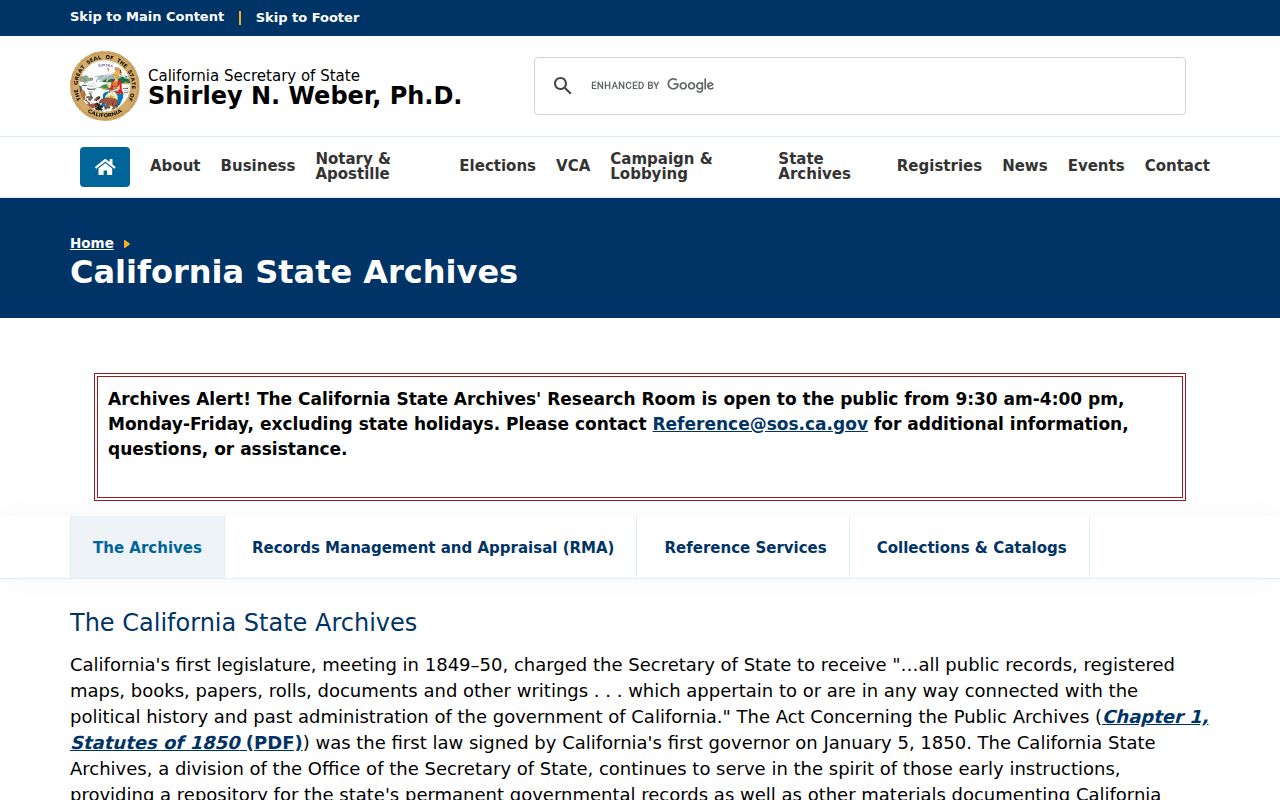
The State Archives image marks the point where a local Glendora address history can move into a broader California collection.
Custodial Searches for Glendora Previous Residents
Law-enforcement and offender systems may return a name, but they are custodial snapshots rather than a record of who lived at a Glendora address. The LASD Inmate Information Center covers county custody. California's Megan's Law registry carries its own use warnings. The CDCR Inmate Locator covers state prison. A Glendora name match needs identifiers and a status or date check.
These channels belong in a Glendora previous-residents research file only when the question is about custody or registry status. They cannot fill the gap left by a missing city directory or deed. Use the LASD inmate search or California Megan's Law directly, and do not infer residence from a custodial result.
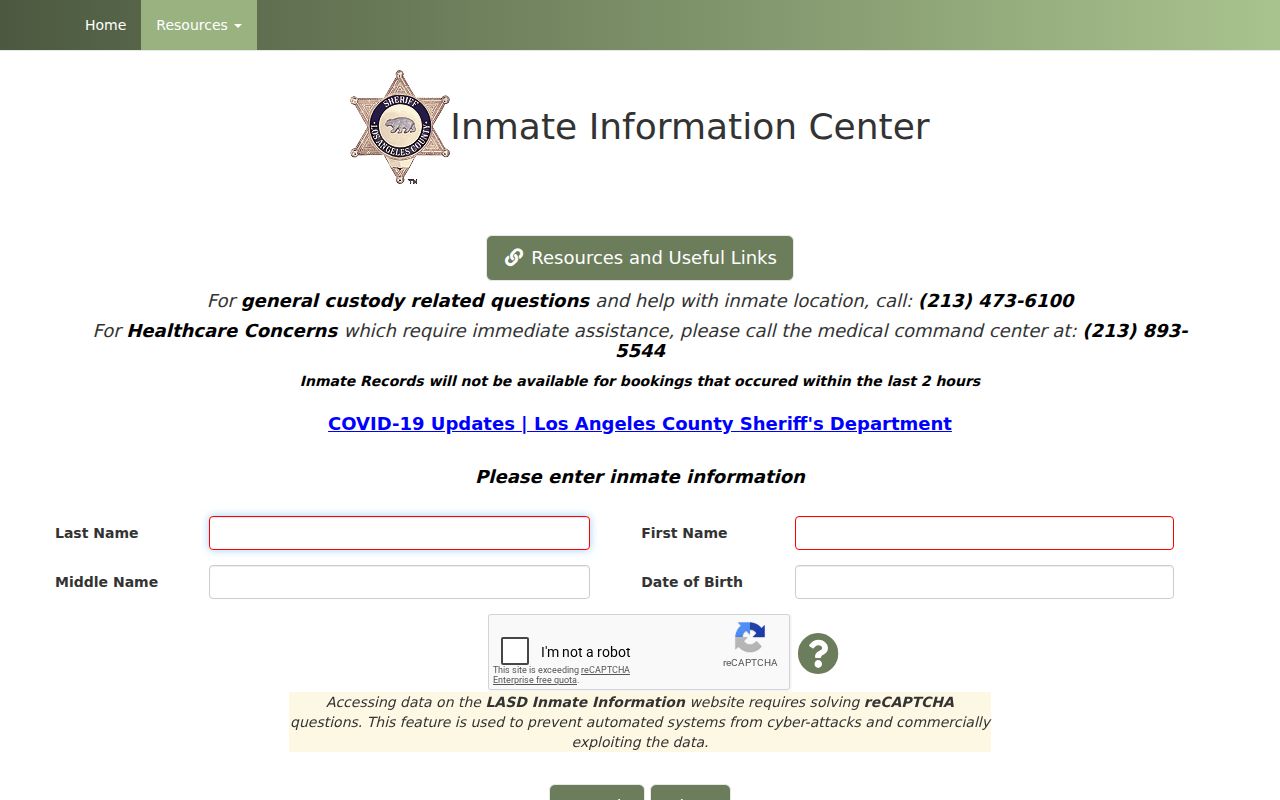
The county custody image shows why Glendora status and residence are separate fields.
The California Megan's Law registry is a source for its stated purpose only, never a shortcut to a household history.
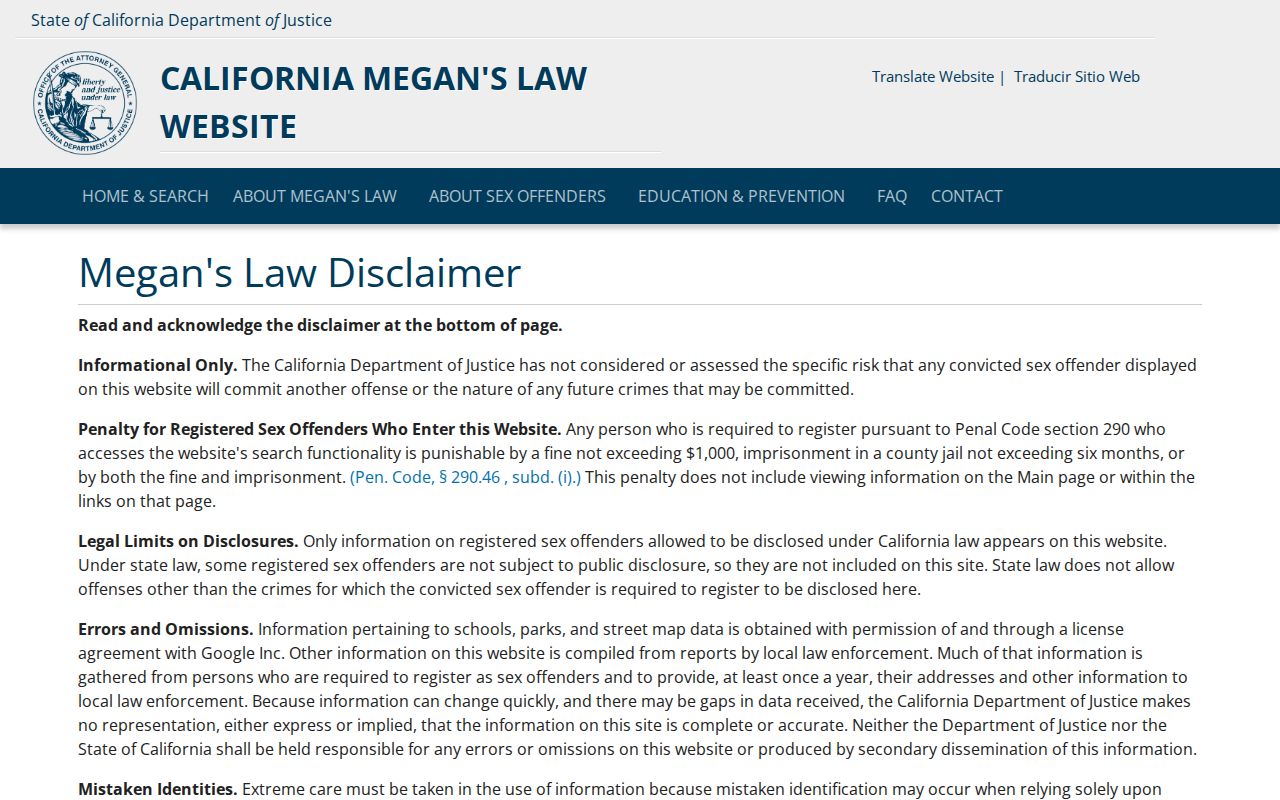
The registry image shows why Glendora status and residence must remain separate fields in a previous-residents file.
Address Gaps in Glendora Previous Residents History
Glendora address continuity fails for ordinary reasons: a street label changes, a number is read incorrectly, a family uses a compound surname, a directory omits a year, or a household is absent from a voluntary listing. Postal Glendora also does not always equal incorporated Glendora. Keep a research log with source, date, exact name, address, AIN, legal description, and the reason two records were connected.
When a Glendora gap remains, say what is known and what is not. A current assessor parcel can connect land to a map. A deed can connect a legal interest. A directory can connect a listed person to a year. A census can connect an enumerated household to a date. Obituary and probate can connect relationships. The previous residents of a Glendora address are reconstructed from that chain, not produced by a single search result.
Use the Glendora By Street parcel workflow for the current address and the Glendora Community Archive for the historical shelf.