
Glendora Resident Lookup Record Coverage
Every record has one job. That discipline is what makes a Glendora resident lookup reliable. The Los Angeles County Assessor Portal anchors a Glendora parcel by AIN or address. A deed shows a recorded property interest. The voter tool can authenticate one person's own status. Court results build a case chronology. Vital records confirm a life event under eligibility rules. Business and license systems reveal a Glendora affiliation or credential. The table keeps those meanings apart.
| Record | What It Confirms | Where | Access |
|---|---|---|---|
| Glendora assessor parcel | AIN, situs, physical and roll facts | LA Assessor Portal | Free AIN/address search |
| Glendora recorded deed | Named property interest and legal description | LA County RR/CC | Office index and copy request |
| Glendora voter status | One person's registration status | LA County status tool | Authenticated personal lookup |
| Glendora court case | Party and case chronology | LA Superior Court | Case route, paid name/images |
| Glendora vital record | Birth, death, marriage, or dissolution event | LA RR/CC or CDPH-VR | Eligibility and copy type apply |
| Glendora license or business filing | Credential, entity, agent, or affiliation clue | California boards and SOS | Public high-level search |
Pick the source that matches the Glendora question first. A parcel, a voter status, and a directory listing can converge on one person, though the convergence remains a research conclusion rather than an official resident label. Always seek a second independent record.
Build a Glendora Resident Name Variant List
Before a Glendora search, write the name in every form a local record might use. That includes a middle initial, a shortened given name, married and prior surnames, Spanish compound surnames, hyphenation, spacing, diacritics, and common OCR substitutions. Keep a known Glendora address beside each variant. An approximate year, a school, an organization, or a family connection can sit there too. The goal is fewer false matches. A similar name is never proof of identity.
Try the assessor address or AIN route first. An older Glendora household belongs in the Community Archive, where you inspect the scan itself. A court matter calls for the party route. Then use the case type, the dates, and the register of actions. A business filing can mislead. The named person may serve as an agent or an office. That is not the same as a Glendora home.
People-search sites make weak authority. Republished records can sit stale or merge two people. They may also drop the field that would separate them. A second record straight from the custodian matters far more. Prefer the Glendora library archive, California entity filings, and the custodian named in the record itself.
Glendora Resident Court Party Search
The Los Angeles Superior Court route starts with a Glendora case-number field. An Access Case action follows. Access Calendar lists future hearings. Party searches stay query-specific. Civil, family, and probate matters use a case-number search by party name link, while criminal matters use a defendant-name link. A Glendora family matter still follows its own protected-file rules. Selected civil and small-claims images may open through account or guest access. Criminal and family images usually stay offline through the same route.
| Enter case number | Text field and Access Case action for public metadata |
|---|---|
| Access Calendar | Future hearing calendar route |
| Party name search | Paid link for civil, family, and probate case types |
| Defendant name search | Paid link for criminal case lookup |
| Document images | Account or guest access varies by case type |
A Glendora result may show the case number, the parties, the type, the filing or register of actions, and the hearing calendar. Name and document searches carry public-access fees under Rule 2.506 and Government Code section 68150(l). Courthouse terminals and the Glendora clerk are the fallback. Juvenile, adoption, mental-health, and sealed files stay restricted.
| Glendora case number | The court identifier for the matter |
|---|---|
| Glendora parties | Names attached to the case, subject to protected-file limits |
| Case type | Civil, criminal, family, probate, or other displayed category |
| Filing or register | Chronology of filed events shown by the result |
| Hearing calendar | Future hearing information where the route exposes it |
Glendora federal cases sit in the Central District of California, Western Division. Party and case searches run through PACER accounts. Pages normally cost $0.10, documents are capped at $3, and quarterly fees of $30 or less are waived.
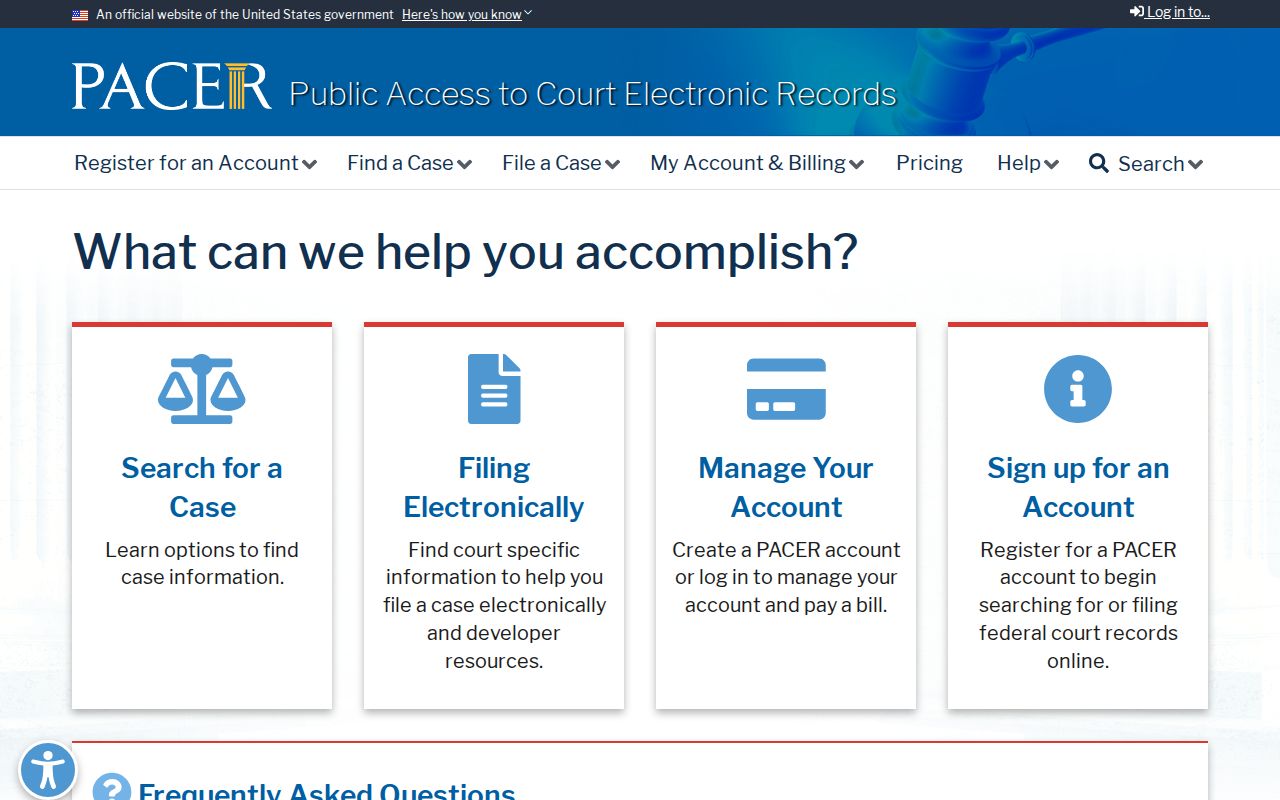
A federal docket and a Los Angeles County result belong side by side in a Glendora search, yet the two run on separate systems with separate fee rules. The difference deserves respect.
Confirming a Glendora Resident Across Records
Link the name to a known detail. An address or an AIN anchors a Glendora match well, while a date, a relationship, a school, or an organization can explain a historical hit. That is the whole discipline. Never merge two same-name records just because both mention Glendora, and preserve the source, date, and field that made the match plausible.
- Anchor the Glendora name to a known address, AIN, date, or family clue.
- Search the Glendora court party route with spelling variants and read the case type.
- Compare a Glendora vital index or historical listing without assuming that a copy is available.
- Check a business, license, deed, or permit record for a separate Glendora affiliation clue.
- Order a certified copy from the Glendora custodian only when eligibility and purpose fit.
- Docket
- The court's running record of a case, filings, events, and hearings.
- Index versus image
- An index is a finding aid; an image is the underlying page and may have separate access rules.
- Certified copy
- A custodian-issued copy carrying certification, which can have eligibility and fee requirements.
Order matters in Glendora. A court match without a date or address can be a same-name trap. A license match may be a professional affiliation. A deed match can signal a Glendora property interest, while a historical directory match may simply mark a listed household in one year.
Glendora Resident Vital Index Versus Certificate
Vital paperwork in Los Angeles County splits into two kinds. An authorized copy can establish identity; an informational copy cannot. County birth records reach back to 1866. The 1962 to the present span is issued at appointment, apart from the 1972 to 1977 gap. Older years, the exception span, and informational copies went out by mail within 20 working days once inspected. Online county orders run through VitalChek. The county route or the state vital-records office both supply the correct form.
Fees come from the CDPH fee schedule. It listed 2026 prices of $31 for a Glendora birth certificate, $26 for death, $19 for marriage, and $18 for dissolution. A search that turns up nothing still keeps the fee, and you receive a no-public-record certificate instead. Confidential marriage is not the same as public marriage. Family Code section 511 restricts a confidential marriage certificate to the spouses or a court order. Adoption files stay sealed.
A dissolution certificate from CDPH is a different animal from the divorce judgment itself. Only the Superior Court can issue the judgment. In a Glendora resident lookup, the certificate answers whether a record exists. The court file holds the case detail. An index hit alone proves nothing about eligibility.
Note: A Glendora vital-record hit can confirm a Glendora event, but the Glendora copy type controls what the document can establish.
Glendora Resident Voter Status Is Not Browsing
Voter tools confirm one registration at a time. California My Voter Status and the LA County tool ask for a last name, birthdate, house number, and ZIP Code. They confirm the status of the Glendora person using the tool. They do not let a visitor browse a Glendora street. They do not let anyone download a list of neighbors. Statewide voter-file requests run through a separate channel. That channel requires a lawful purpose, a contract, and a fee.
A Glendora file may contain a name, date of birth, registration date, residential and mailing address, precinct, contact fields, party preference, optional participation history, and districts. Elections Code section 2194 excludes driver-license and identification numbers. It also excludes Social Security digits, unique identifiers, and signatures. Use is limited to election, scholarly, journalistic, political, or governmental purposes. Ballot choices never appear in a Glendora file.
For a personal Glendora check, use the California My Voter Status tool. The LA County status tool works too. A voter result can support a lawful verification. It is not a public resident lookup list.
Glendora Resident Probate and Heir Trails
Probate links three things: a deceased Glendora person, an estate, and possible heirs. A resident lookup becomes a family-history or estate question at that point. Los Angeles Superior Court probate records hold petitions, estate matters, heirs, and wills filed in cases. The court portal and the clerk are the access channels. The same party-search and protected-file limits that apply to other case types apply here too.
Start with a known Glendora name and an approximate date. Then compare the probate case chronology to an obituary, a recorded deed, and a directory listing. A deed can show a later transfer. An obituary can name relationships. A city directory can place a household at an earlier Glendora address. None of these stands alone as a family tree without the underlying record.
A Glendora birth-parent or adoption question follows different rules. California adoption files are confidential. The vital-record system carries its own eligibility rules. Use official state programs and the Glendora custodian. Do not infer a protected relationship from a public name match.
Glendora Resident License and Business Clues
Business and professional systems help distinguish two Glendora people who share a name. They answer affiliation questions, not occupancy questions. Glendora routes city business-license search through HdL. Its portal covers licensed-business search, applications, renewal, payment, and closure. California SOS bizfile shows entity status, dates, addresses, agent details, and filings. LA RR/CC handles fictitious business names.
For an individual Glendora credential, cross-check DCA and the relevant board. Those include CSLB, the Medical Board, the RN Board, the State Bar, DRE, teacher credential records, and ABC. LA County health inspection sources also help. A city license is a tax or operating registration. It is not proof of professional competence or parcel approval. An agent address may be an office or filing location rather than a home. The California DCA License Search is a separate credential source for telling Glendora names apart.
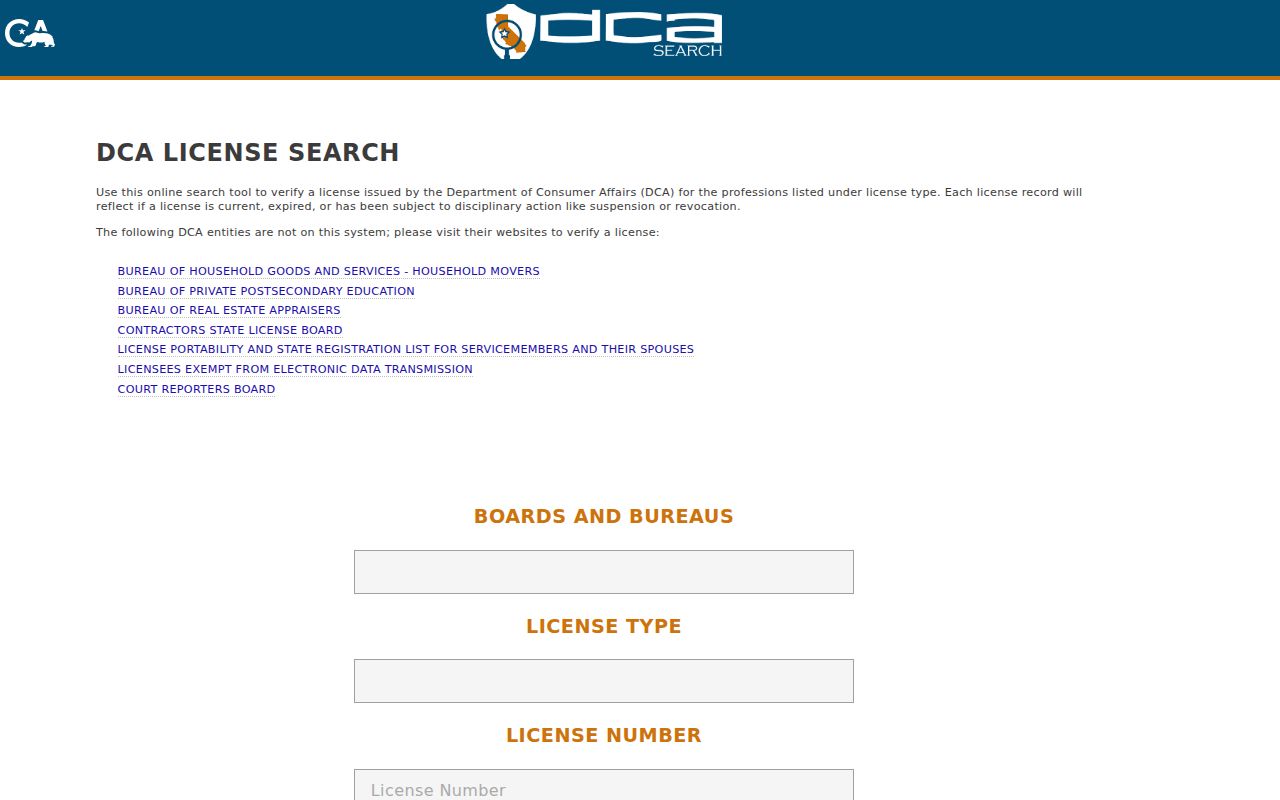
The California SOS bizfile search is the separate entity-record route. It works for a business affiliation clue. Read the result as a Glendora license record, not a resident record. The California DCA License Search offers a similar independent clue. Neither establishes who lives at an address.
Entity status and filing details are what the search supplies. It makes no claim about who occupies a Glendora address.
Correcting a Glendora Resident Record
A Glendora record that is wrong, outdated, or tangled with another person belongs to the custodian who keeps it. That is where a fix starts. The California Public Records Act sits at Government Code section 7920.000 and following, and Glendora City Clerk Kathleen Sessman serves as the local records officer. A CPRA request can chase down an identifiable municipal record that never got posted. It cannot open a protected record or make an agency build a fresh resident list.
The clock matters here. State law gives a Glendora agency ten calendar days to decide whether responsive disclosable records exist, and unusual circumstances can stretch that by up to fourteen more days. Inspection is generally free. Duplication or a defined electronic extraction can carry charges. To seek a correction, name the record type, the date, the address or file number, and the field that looks wrong, then ask for the office's correction route along with a copy of the underlying record. The Glendora City Clerk contact page opens the door for municipal requests, while county deed, vital, court, voter, license, and business systems each run through their own Glendora custodians and procedures.
Privacy Limits on a Glendora Resident Lookup
Not every gap in a Glendora resident lookup means someone vanished. Safe at Home gives qualifying Glendora participants a substitute address and a mail-forwarding channel. Government Code section 6208.1 shields a participant's address and phone once a demand is made. Recorder redaction rules guard Social Security details inside recorded documents. Elections Code section 2194 limits voter data. The federal Driver's Privacy Protection Act restricts DMV records. A blank Glendora address may simply reflect a legal shield.
Lawful use. A Glendora resident lookup is for personal, lawful Glendora research, family history, estate work, and civic understanding. Do not use records to stalk, harass, intimidate, or harm anyone.
California privacy rights give residents real tools. They can know, delete, correct, opt out of sale or sharing, limit sensitive information, and avoid discrimination for exercising any of them. The state recognizes Global Privacy Control signals. California DROP opened in 2026. It can send one free request to more than 500 registered data brokers. Processing begins August 1, 2026. It will not erase the original Glendora government record, though. The state address-protection program and California DROP are the right state routes.
Treat same-name Glendora results as possible matches only. Wait until two independent sources agree on the person, the date, and the context. When the goal becomes a Glendora street, turn to By Street. For a past Glendora household, the city-directory collection is the better fit.
The Glendora Resident Same-Name Trap
Glendora shares a problem with every local archive: names repeat across decades and record types. A directory initial, a court party, and a business agent can each be a different person. A deed grantee can be yet another one. A marriage or death index may point at the right family. Meanwhile the assessor parcel sits at a different Glendora address. The cure is a written source trail.
Write down the exact Glendora spelling, source, date, and address behind each match. Record the AIN, case number, document number, or relationship field too. If the trail stops, say so. A commercial compilation never substitutes for the custodian. And a public record does not authorize contact, surveillance, or pressure aimed at the person named.
An unclaimed-property hit can be a useful Glendora name-match lead. But it is not proof of residence. Use the official California unclaimed-property search only for its stated purpose.
The best Glendora resident lookup is often a modest one. One verified record and one well-supported Glendora connection beat a pile of guesses. State plainly what remains unknown.